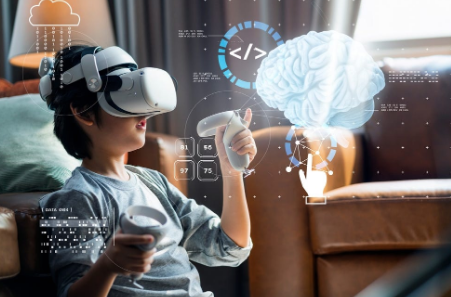
Extended Reality (XR) is reshaping the way individuals interact across various contexts. It creates immersive experiences that foster empathy and understanding, allowing users to connect beyond physical boundaries. This technology redefines communication, enhancing collaboration and creativity in both personal and professional settings. As XR evolves, its implications for education, training, and remote work become increasingly significant. What challenges and trends will emerge as this transformative technology continues to develop?
How XR Fosters Meaningful Connections in Virtual Reality
How does extended reality (XR) transform the landscape of human interaction within virtual environments?
XR fosters meaningful connections through virtual empathy, allowing individuals to share experiences and emotions in immersive storytelling.
By transcending physical boundaries, users engage in rich narratives that enhance understanding and compassion.
This new paradigm not only deepens relationships but also empowers individuals to explore diverse perspectives within a safe, interactive space.
How XR Is Transforming Education and Training
As educational institutions and organizations increasingly embrace technology, extended reality (XR) emerges as a powerful tool for transforming the landscape of education and training.
With its capacity for immersive learning, XR enables learners to engage deeply within virtual classrooms, fostering a more dynamic and interactive experience.
This shift not only enhances knowledge retention but also prepares students for real-world applications, promoting freedom in their educational journeys.
How XR Is Revolutionizing Remote Collaboration
Although traditional remote collaboration tools have facilitated communication across distances, extended reality (XR) is setting a new standard by creating immersive environments that enhance teamwork and engagement.
XR transforms virtual meetings into dynamic experiences, allowing participants to interact with 3D models and environments. This fosters immersive teamwork, enabling creativity and problem-solving in ways that conventional tools cannot, thus revolutionizing remote collaboration practices.
Future Trends and Challenges in XR Technology
What lies ahead for extended reality (XR) technology as it continues to evolve?
Future trends indicate significant hardware advancements aimed at enhancing user experience. As devices become more sophisticated, challenges such as accessibility, privacy, and integration with existing systems will emerge.
Balancing innovation with ethical considerations will be crucial in shaping the landscape of XR, ultimately affecting how users interact in immersive environments.
Conclusion
In a world where Extended Reality reigns supreme, the boundaries of human interaction dissolve like sandcastles under a tidal wave. This groundbreaking technology not only cultivates profound connections and reimagines education but also transforms remote collaboration into a symphony of creativity and innovation. As we hurtle toward an XR-driven future, the possibilities are boundless, while the challenges loom large. The journey ahead promises to redefine our very essence of communication, forging a new era of unparalleled engagement and understanding.